
I’ve found myself procrastinating for a few days following the completion of my outline. I had managed a good few more hours of constructive criticism before checking out. There was the whole issue with the antagonist not making an entrance until the novel was getting ready to draw its curtains. I also realised that I’d somehow written three antagonists into the mix! Michelle’s mum wasn’t meant to be a star of the show, yet there she was, commandeering entire chapters written from her perspective. That was never meant to be part of the plan!
The self-reviews made me feel good about myself. It reminded me that I’m capable of being self-critical without becoming overly self-destructive (though that too has a tendency to happen). I can be honest without becoming too brutal or defeatist. It was a healthy assessment of my frenzied outline. This was the road toward something more sensible. It was allowing me to get a few steps closer to completion.
Then came the check-out. If I’m honest, I sort of expected it to happen. I’d already been delaying the inevitability of wrapping up my treatment outline. I’d been dancing around the endgame like it was a carpet of legol. I didn’t want to step over those spicy fellas. Just tiptoe around the edges and enjoy the soft surface for a while longer. I snapped out of that one pretty quickly though. A few strong words with myself and I had that outline wrapped up before word 5000 was committed to page.
What came next was the hard bit. That was when things were going to get strenuous. I didn’t want to get my hands dirty with the nitty and gritty of actually moulding this pile of clay into something more defined. That was going to take time. That was going to require me to really think about how on earth I was going to make all of this work as an actual book. This was the segment that would really test me.
There’s often this fanciful notion inside my own brain that someday I’ll be able to open a word document, hit my keyboard spontaneously for a good while, only to discover a masterpiece had been produced before my very eyes. Perhaps I could be that singular chimp amidst an infinity of chimps, penning the entire works of Shakespear by happenstance. Isn’t that what Stephen King does, after all? Just plonks himself down at his desk, writes away, and has a bestseller ripe for the shelves come Tuesday tea time? What if I too had such a talent, tucked away inside my subconscious. Never mind that I’ve been known to take an hour redrafting a tough email to a colleague; perhaps there was an inner wordsmith, lurking behind those eyes of mine.
Of course that isn’t how I’m going to write this book. I don’t don the gifts of a literary genius from Maine, as much as I’d like that to be the case. I’m going to have to hash out all sorts of hot nonsense before it starts to resemble something similar to a story. That much I know.
It didn’t take me long to realise that delaying the inevitable was only going to risk me shelving this project once again. I didn’t wish to do that, so on I wrote, telling myself the more I worked at it, the less intolerable the process would become. Form the habit and the hard work will get done.
Normally, by this stage, I’d be thinking of mapping out a list of chapter outlines. I’d figure out how many chapters I wanted, what the key aim of each part would be, the intention of each chapter be, whose perspective would be dedicated to each chapter, and all the other fiddly details. Once I had the skeleton assembled, I could finally start populating it with flesh.
I tried something a little different this time. I wanted to get back into the swing of writing actual scenes before I cracked on with chapter planning. What my motive was for doing this isn’t entirely clear to me, even now. Perhaps I just wanted to prove that I still had it in me. If I can pen 3000 words to open the story, it could well be enough to convince me to carry on.
It might have even be a test to see if this tale had any actual steam in it. While the project is exciting and colourful in my mind’s eye, maybe the whole thing would fall apart the moment I started assigning prose to it. Quinn and Michelle might just be unlikable clowns in a story which lacked substance. I just had to know before I poured hours of time into hashing out chapter outlines and scene descriptions.
There could have even been yet another naive hope that I’d start writing and figure the whole thing out without having to plan the bigger picture. What if I wrote chapter one, struck gold, then moved immediately onto chapter two? Maybe I’d have 30 chapters and a best seller come the end of July!
A chimp at a type writer.
A genius from Maine.
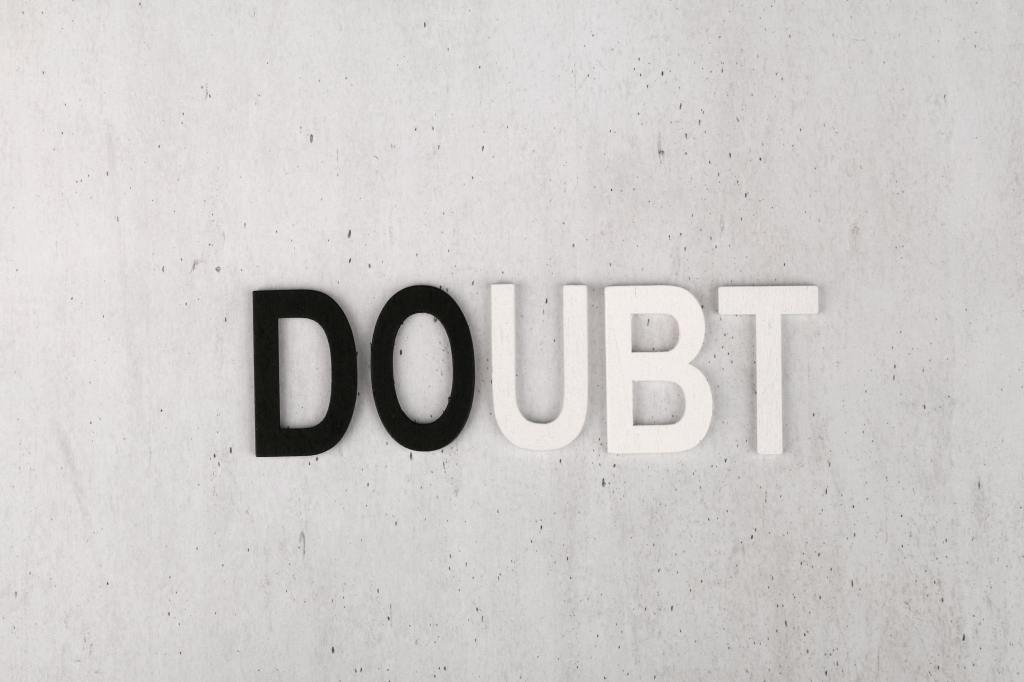
I suspect the probable reason is I just wanted to get over that initial wave of doubt that I knew would overwhelm me the moment I started properly putting pen to paper. Whenever I contribute anything that is intended to make up the immediate story, my brain panics. Outlining and note taking is great, but when the time comes to executing what project I’m working on, my brain throws a tantrum of epic proportions. It’s like Gordon Rasmey with a bowl of partially cooked soup. It’s a disgrace, a sham, a monstrosity of a creation! Get that thing out of here, pronto!
My mind certainly didn’t disappoint. As I wrote Quinn’s introduction into the world that will become her story for the next 80,000 words or so, I felt myself recoil. Every sentence and line of dialogue felt as forced as a smile at a customer service desk. Why was I doing this? I can’t write. Leave it to the pros. There’s no need to disappoint myself like this. Stick to Health and Safety. There’s nothing for me here.
Oh how I wanted to go back and edit the socks off of each sentence I’d penned. I had to drag myself away from that urge, kicking and screaming. Don’t edit. Just write. Get to the end of these 3000 words and prove I can write a chapter. It doesn’t need to be good. It doesn’t need to work tonally. Just do it and get over this initial discomfort. It’s going to become a frequent companion going forward. Desensitise to the ick and reach the end. Editing comes later.
I’m about 75 percent of the way through that opening chapter now. It’s a bit trippy and weird and all over the place. For some reason I’ve introduced a new character who I have no intention of revisiting later on down the line. She’s just a nice little companion for Quinn to have a moment or two with before the main story pulls them apart. It’ll give our hero someone to mourn over as her new life takes hold. I don’t know if this is an effective thing to do, or if it’s just peppering my story with my unnecessary fodder that I’ll need to gut later on down the line. I know it doesn’t matter right now, but at the same time, I think it does.
Also, why does Quinn sound like a wise sage who has lived a thousand life times in the draft? She’s supposed to be an intelligent robotic toddler, not a self-help guru! I repeated this to myself with each and every sentence I wrote, yet still I wrote her as though she spends her days musing over the art of existence whilst sipping green tea. Yes, I know there’s time to iron all that out at a later date if need be, but it’s still bothering me like you wouldn’t believe.
I detest the number of typos I spot each time I glance toward the top of the page. Why do I write “angle” when I mean to put “angel”? It’s every time, without fail! I know it’s an easy mistake that can be rectified in a heartbeat. It still doesn’t fail to fill my head with enough self-doubt to depress even Paul McKenna.
I could not help but wonder today whether I was better suited to trying something else. Maybe I could return to writing video essays. Perhaps I could get good at drawing. Who knows, there might be another untapped talent I’m missing out on utilising. Surely these starry eyed dreams of producing a book don’t belong to a dafty like me. Maybe Synthetic Empires should stay buried in 2020, with all the other screenplays and stories I dreamt of turning into realities during the midst of the pandemic.
Such thoughts shouldn’t be entertained, of course. It’s just my head trying to protect itself from potential disappointment. How can my book fail if it never makes it to print? Though I am aware that never having tried will ultimately fill me with more disappointment than having it release to no readers. The self-protection built into my psyche isn’t going to protect me from anything. It’s just going to stop me from having a go at achieving my dreams.
All of which is to say I’ll crack on with the remaining 25% of my opening chapter. Once it’s done, I’ll start to build the outlines for each of the book’s three parts. I’ll keep going. The doubt will linger and torment from time-to-time, I’m sure. I just can’t let it halt this project yet again.
 Spotlight Indie
Leave a comment