
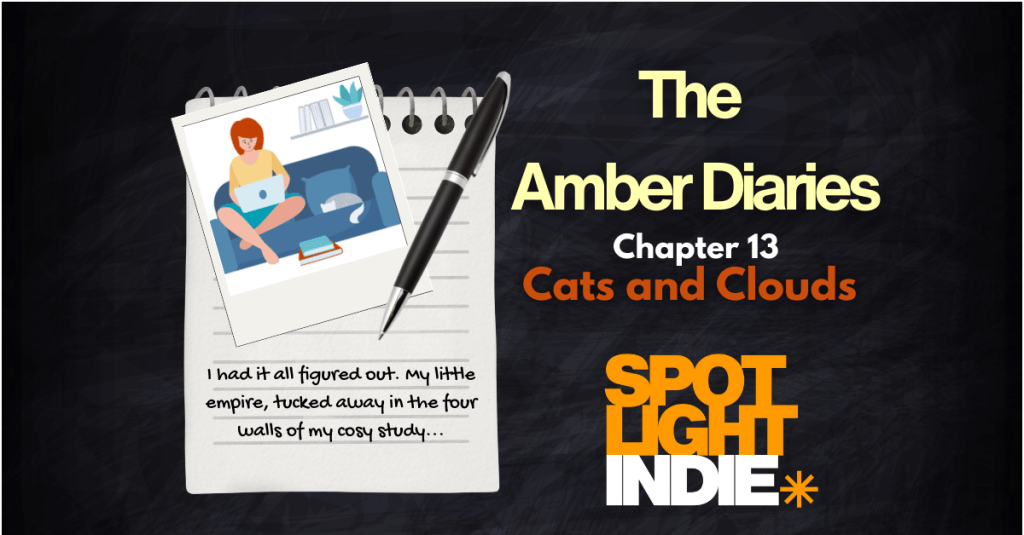
I had it all figured out. My little empire, tucked away in the four walls of my cosy study, was my creative sanctuary. For two years, I’d been editing podcasts, writing essays, rustling up TikTok shorts and weaving word-riddled dreams from this one spot. I’d grown so accustomed to locking myself away from the world that I saw no reason to shake up the status quo. It was a perfect system; a space where I was detached from the hustle and bustle of everyday life.
My attempts to broaden my writing horizons last Christmas had also fallen flat. I’d splurged on a fancy iPad Pro, forking out almost grand from savings to make my creative endeavours slightly more mobile. I had visions of myself setting up shop in a local cafe sipping lattes while working on my latest draft. Oh how writerly of me. But the costly slab soon started gathering dust on my bedside table. The problem? My darn Scrivener wouldn’t sync to it properly. As it turns out, I needed Dropbox to work between devices. I suppose I could have just downloaded it, but I have enough Cloud services as it is. With Google and Microsoft taking change from my bank each month in exchange for additional terabyte space, I couldn’t be doing with any more of the darn things!
So I soldiered on, retreating to my study, where I continued to beaver away using Scrivener for my many writing escapades. In addition to long-form fiction, I used the platform to pen interconnected essay series, draft out short stories, and write notes for my podcast. I liked having all my ideas clustered in a single space. I could jump between sources and scripts with just a couple of clicks, forcing my unstructured mind to be slightly more organized than usual.
If Scrivener didn’t want to talk to my shiny new iPad, then fine. I’d just use the iPad to watch movies and read articles. I didn’t need to write in coffee shops, after all. My system was set up nicely. I lived alone and didn’t need flexibility in terms of where I could write. If I wanted to close myself away in my study for hours on end, who was there to complain? No one, that’s who.
But then, in June, something barmy and unexpected occurred. There’d been this stray feline knocking about in my neighbourhood for wuite some time up until that point. I first noticed her back in January. Back then, the fury little skipper had gotten into the habit of snoozing in my recycling bin. I couldn’t be having that, especially during the icier months, so I built her a shelter; an old rabbit hutch refashioned into a feline sanctuary. I put out food and water out for her each morning and night. She seemed to love it. It was nice looking after her. Gave me a sense of purpose. But then she decided to test my hospitality. The audacious critter had the nerve to spring a whole litter of kittens that very sanctuary! At that stage, I felt I had little choice; I had to adopt her properly, bringing both mum and her kittens into my home.
Overnight, my quiet abode became a foster centre for five needy felines. The four little ones quickly grew into energetic nightmares. They were climbing, scrapping, and pooping all over the shop. They were also hungry, very hungry. I had to speed-run the whole “how to raise a cat” guidebook in the space of a few weeks. I was stressed, rushing about, and seldom in my cosy study.
At the same time, I’d also come down with a severe case of the creativity bug. Not only had I resumed writing weekly essays on my website, but I’d also started planning the very novel this diary is supposed to be chronicling. The urge to write was stronger than ever, but with my presence needed in the kitchen and living room, the study seemed too far away from my newfound family of fun-sized tigers. If I was to create and cater within close proximity, my writing had to be more mobile.
So off I went, trying to find more convenient ways of alternating between writing on my desktop and working on my laptop. My saviour, Scrivener, suddenly felt a little clunky and slow for my flexible needs. I needed to finish a paragraph on my computer, then resume the next one on my sofa moments after feeding-time had finished. I needed something that was fast, fluent, and not prone to creating dreaded version conflicts.
I tried out Living Writer and Dabble. Both programs were pretty delightful. They essentially had all the bells and whistles that I loved about Scrivener, all whilst sitting in the whimsical Cloud that floats about in the digital ether. Not only did these services work on my iPad, but I could use them on my phone, too! This allowed me to do cheeky little rewrites on a lunch break or while out with friends. Talk about broadening my writing horizons! I was more mobile than ever baby!
The only drawback was their costs. Unlike the one-off payment that drew me to Scrivener in the first place, these pesky little darlings had a monthly bill strapped to them. During peaceful times, I wouldn’t be so fussed about paying an extra £15 each month, but at this very moment, it wasn’t sustainable. Raising a spontaneous cluster of kittens meant vet bills and food costs had buffed up my monthly outgoings. While three of the five cats have now been rehomed, the mother and remaining baby I’ve decided to keep for myself continue to cost me more than I’d budgeted for. Plus, the never-ending stream of subscription services already sucking my current account dry made adding another one to the mix all the less appealing. I needed something affordable, practical, and, above all, simple.
Today, the answer came to me. It was so obvious, yet so hidden from me. My solution had been sitting right in front of me the whole time: Google Drive. I’d been subscribed to this service for years, yet only seemed to use it to house my video essays, podcast productions, and photo albums. I hadn’t considered that with a little tweaking, I could get it to do more or less what Scrivener does all along.
I could fashion a Synthetic Empires folder. Inside, I could have subfolders for notes, environments, and character profiles. In the Manuscript subfolder, I could include a separate document for each chapter. This way, I could continue to zone in on individual chapters as opposed to one continuous transcript. If I needed to reorder a chapter or move it to my Scrapped folder, I could simply rename or relocate. Sure, it might be a tad more layered and less neat than Scrivener’s interface, but the principle was still the same. I could even create scenes in each chapter document using the Tab feature. It was all there, ready and waiting.
I didn’t need to splash out on swanky new software to make writing my novel or essays more mobile. I could just utilize the tools that were already there. Sometimes, when a problem presents itself, it’s easy to assume that throwing a bit of cash at the issue can make your troubles go away. I just need that fancy bit of software, and all my writing worries will wither away. The truth is, sometimes all I need is a proper, good, pragmatic think to come up with a solution.
So here I am, lounging on my sofa with two cats perched on either side of me, preparing to resume novel writing without the need for Scrivener. I’m no longer reliant on my four-walled empire. All I need is a costly rectangle, a Bluetooth keyboard, and access to one of Larry Page’s many domineering apps.
How times can change.
 Spotlight Indie
Leave a comment