
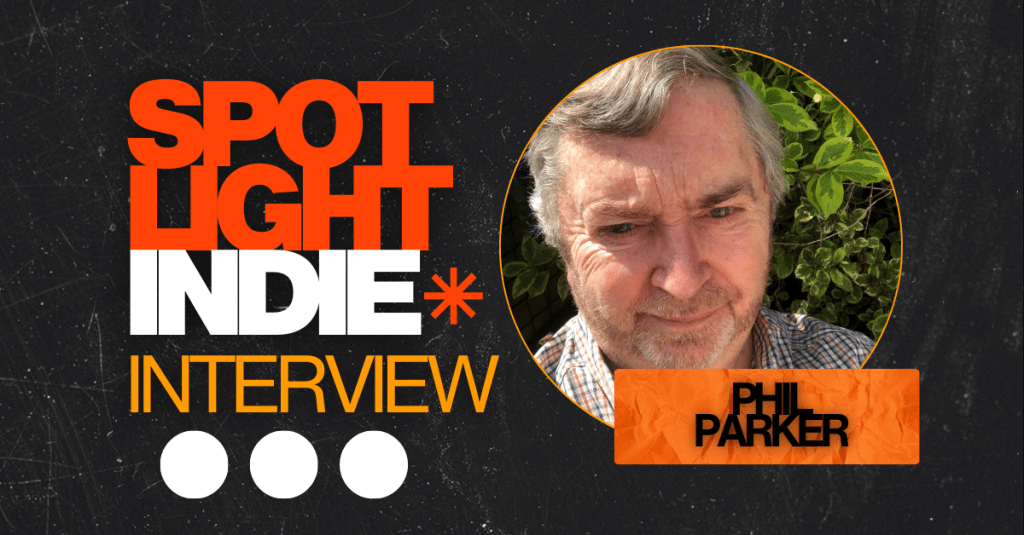
Hi Phil! Tell us about your most recent release or an upcoming release:
I released my latest novel at the book party launch organised last month by those wonderful people at Spotlight Indie. (Don’t know if you’ve heard of them?) Circe’s Coven is the third and final book in the British Bureau for the Arcane series. The series has proved to be very popular, especially in America, where they seem to like reading about British folklore and secret agents.
Who was the first author that you remember reading?
I’m old enough to have been weaned on Enid Blyton, but I didn’t stay with her for long. I do remember sitting in an armchair one evening being frightened to death by a spooky scene in a Famous Five story! I quickly moved onto science fiction and especially Arthur C Clarke. I loved how his stories were so grounded, they felt like they could actually happen. That sense of literature being based on features from the real world remains in me still and influences my own storytelling.
Who was the first indie author that you discovered?
I came to indie authors very late, as I did to fantasy. It was Richard K Morgan’s “Land Fit For Heroes” trilogy that I credit with that achievement. That was about 15 years ago. I’m not sure who was the first indie author – probably Rob Hayes or Dyrk Ashton, I remember reading some of their early works.
Which authors have most contributed to or influenced your indie experience?
How long have you got?! You realise I need to go into a deep state of contemplation now to arrive at a coherent answer? First writer has to be Raymond Feist, who wrote Faerie Tale (trad published). I loved how his use of traditional folklore underpinned the story; it was the book that made me think “I want to do that too.”
Next has to be Damien Larkin, the Irish military science fiction writer. He wrote the Big Red stories, about Nazis on Mars and I’ve described him as the Robert Heinlein of modern military SF. He’s an amazing writer and he’s become such a champion of my work. His encouragement helped me through all the “imposter syndrome” moments and when someone of his talent says you’re good, that means a great deal!
I’m going to cheat with the next part of the answer! The other authors (and there are quite a few!) are all part of the Creative Commune, a network of British and Irish authors where I act as Chief Cat-Herder. They’re all good friends, hugely supportive and immensely talented. The bond was reinforced by the Spotlight Indie event in Shrewsbury in 2024, when many of us got a chance to meet in person for the first time. That was a life-defining moment for me.
What element of writing life do you find the hardest?
Apart from believing in myself, do you mean? I struggle to advance the story when it doesn’t sound right in my head, when the characters aren’t speaking to me. I’ve learned to listen to my instincts and when something feels wrong, I know I’m missing something important. I’m a confirmed, card-carrying Pantser, so when you don’t have a roadmap, you need to have a rough idea of the direction of travel. I must have an internal compass in my head (where my brain used to be) and I listen to it now. I’ve spent enough time trapped in the jungles of confusion, the deserts of regret and the swamps of This-Plot-Isn’t-Working.
Where do you write and how often?
I mentioned my old age at the start. When I gave up my career, it was so I could start a new one – writing. In the latter part of my first career, I wrote a lot – educational journalism for four years, articles for magazines and educational resources. It showed me how much I loved writing. I subscribed to a writing course with Curtis Brown Creative so I could start writing fiction with some degree of knowledge and expertise. I treat this second career like my first, I make a point of writing stuff every day whilst balancing that on marketing, staying up to date with publishing trends, looking at what other writers are doing. I’ve just written a blog post about Indie Author trends for 2026 – the research and evidence suggest a 50-50 split between writing and “the industry”, even becoming an ‘influencer’, is part of that career. I write in my study, a hallowed place of great mystery where I sit and think big thoughts. I have my book covers on large canvasses on the wall as inspiration and validation.
If you had to write a book about your writing experience, what would it be called?
Writing Yourself into a Corner – and Escaping.
You can find Phil’s books here.
This is a shortened version of Phil’s interview. The full interview is available to our Patreon members. You can find out more about our Patreon and additional content here.
 Spotlight Indie
Leave a comment