
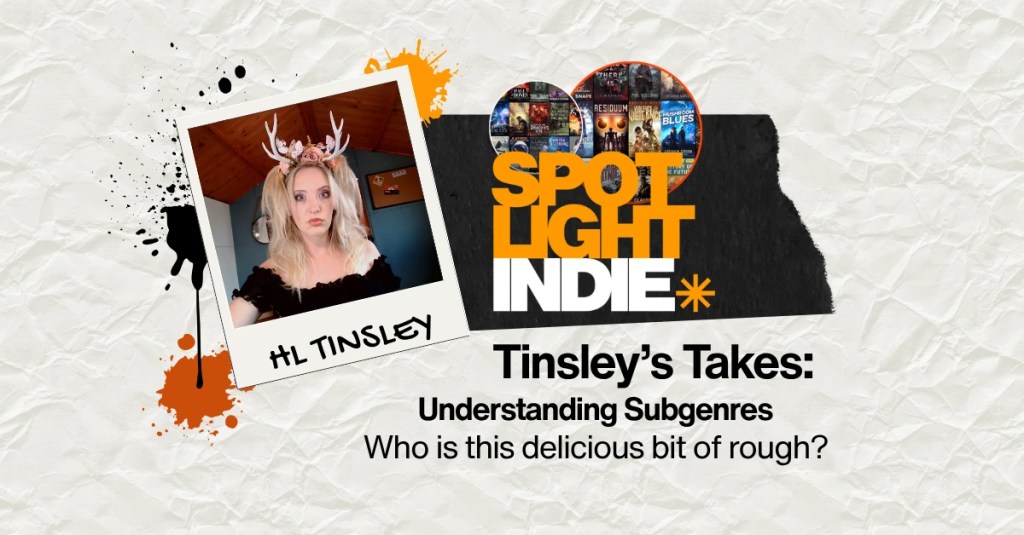
Of all the topics I knew I’d be covering in this blog series, understanding subgenres is the one I felt least well-equipped to write about. I tend to write in very specific arenas – I have a wheelhouse, and I like to stay in it as much as possible. I would categorise the genres I write in as ‘broad niche’, or on the subgenre periphery. I often describe We Men as grimdark light or entry level grimdark. The niche factor comes into play more so with The Hallows than We Men, however both stories can be defined more by their subgenres than their genres.
Let’s start with We Men of Ash and Shadow. It’s a fantasy book with very little fantasy. At least, very little of what people automatically think when hearing the word fantasy. When I first started writing the book, I set out to write something grim yet slightly swashbuckling a la The Musketeers. I wanted period drama-action with modern, snarky irreverence (like Plunkett and Macleane but with gangsters).
I’ll wait while you go Google Plunkett and Macleane; it’s not big or clever, but worth a watch for Alan Cumming’s iconic ‘Who is this delicious bit of rough?’ line alone.
The point is, I ended up with something very different.
Firstly, the timeline shifted by about 250 years. We climbed, bloodied and dirtied, out of the world of muskets and cannon and into a more Peaky Blinders-esque territory. The story became less about piratical antiheroes and more about social upheaval and revolution. The point is, none of it was intentional. It wasn’t until after writing it that I stumbled into subgenres like grimdark and gaslamp like someone accidentally locating an underground speakeasy.
The benefit being that once I found these things, marketing We Men to the right audience became incredibly easy. The year was 2020. Grimdark was in its ascendency. People liked their protagonists bitter and their outlook world-weary. I found a space and fit right into it. This marketing lark was easy, right?
Enter The Hallows.
Let me be clear; I’m not slating my own work. The Hallows is great. Personally, I think it’s my best book, and you should go out and buy it right now. Writing it was pure joy – it’s got drugs, gun fights, flying nuns, and seven-foot-tall reptilian women. What’s not to love? The book is a wild, fun adventure.
Marketing it is not.
Why? Because I just can’t make it fit.
And herein lies the danger. While Vanguard’s subgenres create a selling point, The Hallows subgenres create a barrier. Vanguard attracts. The Hallows rebuffs. It’s not quite science-led enough to be science fantasy. It’s not bizarre or surreal enough to be new weird. It’s too whimsical to be grimdark. It stands on the outskirts of each of these niche subsections, tapping on the window but not quite making it inside.
Does that mean it’s doomed?
Of course not. Like I said, it’s a good book. The Hallows has its audience. They’re just being a little more elusive. It isn’t the books fault that I’ve marketed it incorrectly or that I’ve yet to work out quite what it is (other than delightfully odd).
The point of my story is this: having experienced two very different reactions to launching books that can be defined more by their subgenres than their overarching genres, I have garnered the following kernels of wisdom:
Timing is Everything
There’s an old adage in traditional publishing (or so I’m told) that if you want to write for the mass market, don’t write what’s popular now. Write what’s going to be popular next. I’m not sure how you’re supposed to know what’s next, but that’s a problem for future you. And no, I’m not saying you should write stories to appeal to a particular market. What I’m saying is that timing can have a huge impact on your book’s reception. Marketing a grimdark book was easy five years ago; now it’s a tougher sell. Sometimes the best thing you can do is accept that now is not your moment. That doesn’t mean your cyberpunk pet detective novel isn’t wanted. Or that there isn’t an audience for it. Like all trends, things come in cycles, so learn to be patient. Today’s niche might be tomorrow’s genre à la mode.
You Need To Go All In
You don’t always have to market a book according to subgenre. There’s a balance to be found between broad and being niche. Sometimes it’s fine to call something ‘epic fantasy’ or ‘dark fantasy’. You don’t always need to drill down into the minutia of where it sits.
However, if you are going to go down that route, you need to commit. I went all in on Vanguard. Once I found out that grimdark was a thing, I rocked up to any place I could find fans of Abercrombie, Lawrence, or Lynch and lobbed my book at them, yelling READ THIS.
My mistake with The Hallows was that I tiptoed in. I was apologetic. Not because I didn’t have faith in the book, but because, honestly, I didn’t think I was cool enough to pull off a China Mieville meets Luke Arnold. The fact is that as much as you need to believe in your work, you also need to believe in your ability to sell it.
Ultimately, I think understanding subgenres is not just an exercise in understanding your book, but in knowing where you fit as an author. Having the confidence to lean into something even if it’s off the beaten path or the audience for it isn’t as vocal as others might be. And if all else fails, you could always just invent your own. Its fine. We make things up for a living.



Leave a Reply